Across countries, efforts to prevent vertical transmission are evolving. Ministries of Health are strengthening integrated service delivery, expanding prevention tools, improving data systems, and navigating funding shifts to ensure that no child is born with HIV.
Through the HIVE Impact Network, countries are sharing how they are translating policy into practice. In the Prevention in Practice series, national vertical transmission prevention (VTP) leads reflect on what they are prioritizing, adapting, and learning as they advance prevention within their health systems.
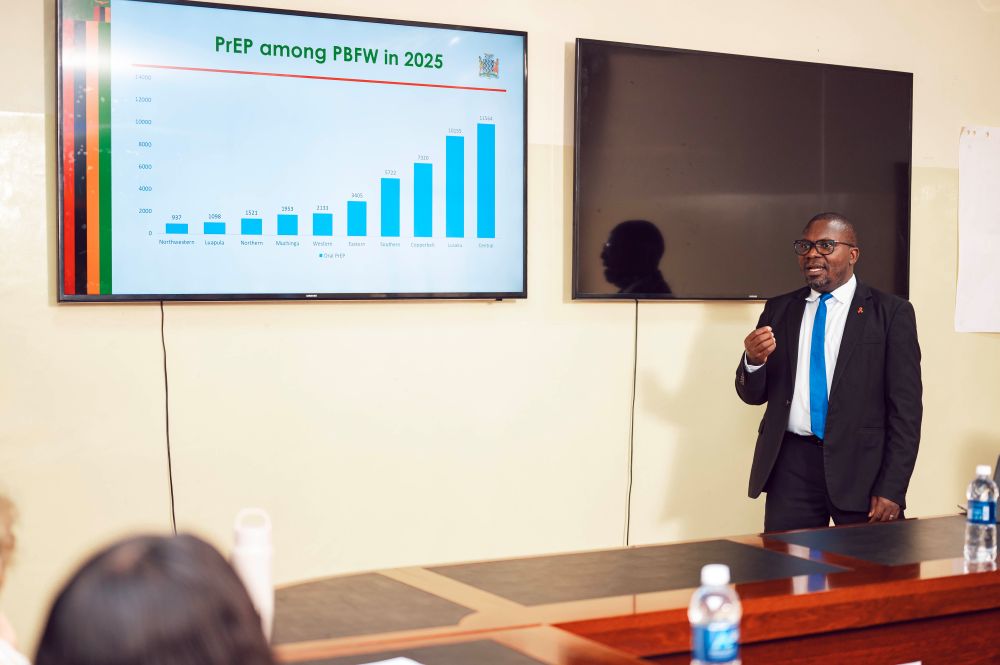
Dr. Chimika Phiri is a pediatrician with more than ten years of experience working in Zambia’s HIV response and currently leads the national HIV prevention program within the Ministry of Health. With a strong commitment to protecting children from preventable HIV infections, his work has focused on preventing vertical transmission of HIV through Zambia’s VTP program.
Q: What are the top priorities for preventing vertical transmission in Zambia right now?
We have adopted triple elimination of vertical transmission. Our focus is to achieve the elimination of HIV, syphilis, and viral hepatitis B. Hepatitis B is a recent addition.
We have noted that we still have issues around data in the VTP program. We are strengthening data capture and reporting across data quality elements.
We are also strengthening the capacity of staff providing services to pregnant and breastfeeding women. Above all, we want to adopt a sustainable approach in delivering services by strengthening the integration of HIV, syphilis, and viral hepatitis services into maternal and child health services.
Q: How has Zambia continued to deliver VTP services amid funding constraints?
After the stop-work order in early 2025 and a reduction in support across HIV programs, the VTP program stood out as resilient.
This is because of the integration agenda that started some time back, particularly in high-volume facilities. When we compared key indicators with other HIV programs, the VTP program continued to perform well.
We ensured that HIV and syphilis services were provided within maternal and child health services. These services are mainly delivered by government staff, so their presence allowed services to continue.
Q: What value has being part of the HIVE Impact Network brought to your work?
HIVE has been key in providing knowledge through webinars, exchange visits, and country engagements.
As a country, we have learned a lot through these interactions. Capacity building is especially important among staff. Interactions with the HIVE team have had a significant impact on us. The several visits to our country have benefited us a lot by providing a structured approach to prioritizing our HIV services, examining systems that may be affected by funding cuts, and navigating those challenges.
This series brings together perspectives from national vertical transmission prevention leads across the network, highlighting how countries are approaching prevention of new pediatric HIV infections within their own health systems. Through the HIVE Impact Network, countries exchange practical experiences on implementing and adapting vertical transmission prevention programs.