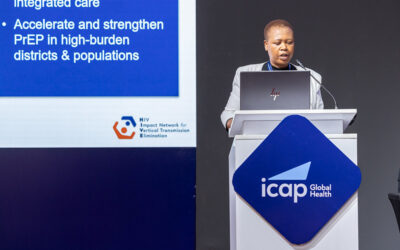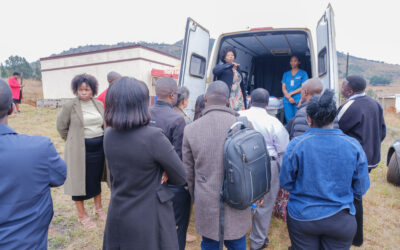

With approximately 38,000 service delivery points across Nigeria, efforts to advance triple elimination of HIV, syphilis, and hepatitis B must be designed to function across diverse settings and reach large numbers of pregnant and breastfeeding women.
Hafsat Iyanda, MBBS, MPH, serves as the national PMTCT lead within Nigeria’s HIV, STI, and Viral Hepatitis Control Program. Her work focuses on advancing triple elimination, while strengthening testing, early infant diagnosis, and community linkage across the country’s health system.
In this Prevention in Practice interview, Dr. Iyanda outlines how Nigeria is advancing its triple elimination strategy by expanding testing.
Q: What are the top priorities for preventing vertical transmission in Nigeria right now?
Our top priority is triple elimination—ensuring that no child is born with HIV, syphilis, or hepatitis B. To support this, we have distributed approximately 2.3 million test kits across over 38,000 service delivery points nationwide so that pregnant women can be tested for all three infections.
Currently, testing coverage stands at about 82 percent.
Q: How is Nigeria using evidence to inform the national scale-up of triple elimination?
Because Nigeria is a large country, we are using a pilot approach before scaling up nationally. We developed a protocol for a triple elimination study being implemented in 18 facilities across nine states, covering all six geopolitical zones.
This pilot allows us to assess vertical transmission prevention implementation in different contexts and generate evidence to guide government and partner investment in nationwide scale-up.
Q: What other areas are critical to strengthening prevention efforts?
Another priority is early infant diagnosis. With support from the Global Fund, we are expanding point-of-care testing for HIV exposed infants, including testing at two and six months.
Community linkage is also essential. Community partners help ensure that mothers receive prophylaxis on time, including women who do not deliver in health facilities. This helps protect infants even when mothers test positive for HIV.
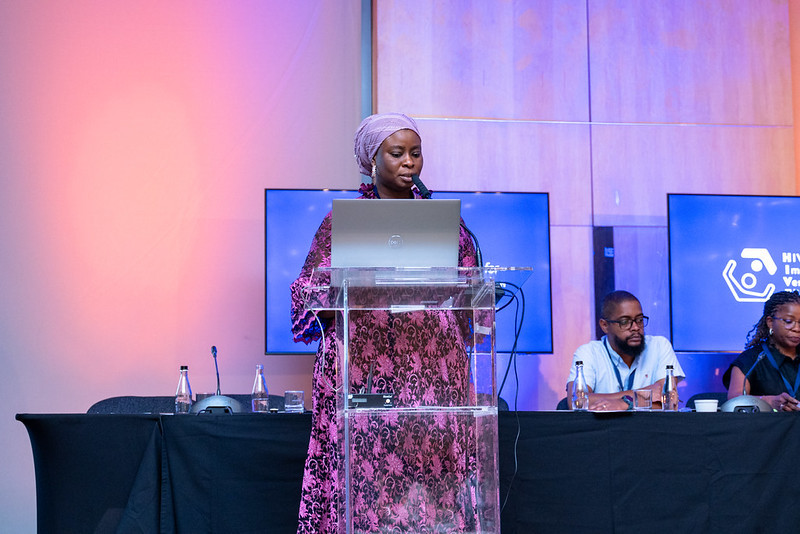
Q: What value has participating in the HIVE Impact Network brought to your work?
Through the HIVE Impact Network, we have benefited from country-to-country learning and peer exchange. Seeing how other countries have improved antenatal care attendance—some reaching 95 percent—has helped us reflect on our own performance, which is currently around 88 percent.
The use of capability maturity model (CMM) staging has also been valuable. It helps us identify areas of progress and gaps, guiding discussions on next steps.
Through these exchanges, we have identified additional priorities, including improving HIV testing among breastfeeding women in postnatal care, where positivity rates can be significant. These insights are informing discussions with our monitoring and evaluation teams.
This interview with Dr. Iyanda is part of HIVE’s Prevention in Practice series, highlighting how countries are approaching prevention within their own health systems. Through the HIVE Impact Network, these conversations are meant to share priorities, strategies, and adaptations shaping prevention efforts to promote peer exchange.