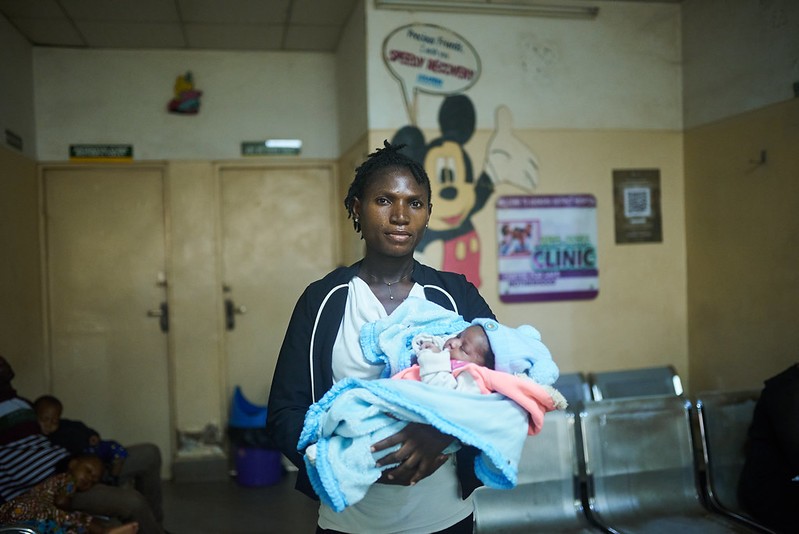
When Agatha Amaechi found out she was HIV-positive six years ago, her first thought was that her life had come to an end. “I felt like everything was over,” she said. But when the hospital contacted her to come in for testing, the nurses reassured her, explained what her care and treatment would look like, and reminded her that she could live a healthy life. She started taking her medication immediately and never stopped.
Today, at 33, Agatha has five HIV-negative children, including a newborn who was only a week old during a HIVE technical team visit to the Asokoro District Hospital in Abuja. Agatha was receiving counselling from a mentor mother. Her story is proof that hope and determination can lead to vibrant, healthy families, even after an HIV diagnosis.
Stories like Agatha’s are unfolding quietly in clinics across Nigeria, bringing hope. Building on these successes, nurses, midwives, and mentor mothers collaborate with pregnant and breastfeeding women, supporting their adherence to HIV medication so that babies can test HIV-negative.
This collaborative effort is evident at Lugbe Primary Health Care, where the week begins with antenatal registration. Women arrive early, settling into plastic chairs as health workers move through their routines. “Every Monday we register about 40 new women,” said Jacinta Adelea, a female counsellor at the center. “We test everyone for HIV, free of charge. And if anyone tests positive, we start treatment that same day and follow the mother until she remains healthy on treatment and her baby completes HIV testing and is confirmed HIV-negative.”
Inside the clinic, such commitment appears in a bounty of small interactions. A nurse steps outside between visits to call a mother who missed her appointment. Another checks a register filled with names and careful tick marks, tracking which infants are due for their next test. Babies born to women living with HIV receive antiretroviral prophylaxis medication at birth, and both mother and child return at six weeks, one year, and again after breastfeeding ends, in line with WHO-recommended early infant diagnosis testing for HIV-exposed infants. Health workers shared that infant infections have become rare, a testament to improved vertical prevention efforts at the facility level.
“When the baby finally tests negative, that’s our happiest day,” Jacinta said proudly.
The health care workers here know the impact when a mother walks out holding a child who will grow up HIV-free.
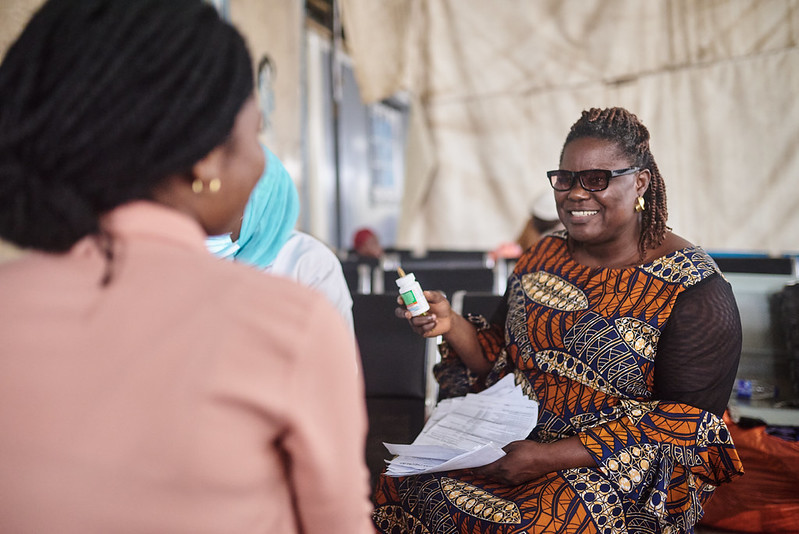
They also know heartbreak. When a woman stops coming, or, on the rare occasion, when a baby does test positive, those are the moments the nurses take home with them. “It’s painful,” said Jacinta, but she and her colleagues keep going. Over time, they’ve noticed a shift: women who once hid their HIV positive status now share it openly during health talks led by mentor mothers. They encourage others to test, stay on treatment, and deliver at the facility. The stigma isn’t gone, but things feel better because of their shared experiences.
Even so, a cloud of uncertainty causes concern. Mothers and nurses have heard whispers about funding cuts and worry about what that would mean for their care. “I heard they might stop giving free drugs,” Agatha said. “It won’t be easy. Many people may not have the money to afford the drugs. If they stop helping us, it will affect a lot of lives.” Health workers share her fear. Years of progress depend on a system that remains fragile and still needs support for staff, commodities, and the infrastructure that enable vertical transmission prevention. Yet, despite the uncertainties, they express determination to keep moving forward. Their commitment to protect a new generation remains strong.
Nigeria continues to carry one of the largest pediatric HIV burdens globally, with an estimated 22,000 new HIV infections reported in 2023. That is why small, consistent wins inside facilities like Asokoro District Hospital and Lugbe Primary Health Care matter: universal HIV testing at the first antenatal visit, immediate ART initiation, phone calls to every mother who misses an appointment, and follow-up of mother–infant pairs through the full breastfeeding period.
“They keep calling us. Even when you miss your appointment, they will be on you to come. I also bring my children to be tested periodically,” said Agatha. The hope for health care workers is that mothers like Agatha keep returning and that babies continue to test negative.