In Mozambique, prevention has moved to the center of vertical transmission elimination efforts. As new prevention tools and guidance emerge, the focus is increasingly on identifying women at risk earlier in the care continuum and on strengthening prevention services within maternal and child health care.
Maira Marra, MD, works with Mozambique’s Ministry of Health on vertical transmission prevention (VTP). Her career began in health facility management as a clinical director and continued through the Maputo municipality, where she served as an HIV program supervisor focused on care and treatment. In 2020, she shifted her focus to prevention work within the VTP program. “At first, it was very challenging because, as someone with a care and treatment background, I thought PMTCT was simple and small,” she said. “But I quickly discovered how big, complex, comprehensive, and critically important it is.”
In this Prevention in Practice interview, Dr. Marra discusses Mozambique’s prevention priorities, the value of peer learning, and how engagement with HIVE has translated into concrete changes in her country’s program.
Q: What are Mozambique’s top priorities for HIV prevention right now?
Our priorities are guided by where the gaps are. Our vertical transmission rate remains high, with too many infections coming in two ways. First, from HIV-positive women who aren’t fully engaged in care, and from women who are newly infected during pregnancy and breastfeeding. So, our priorities are guaranteeing service quality, strengthening adherence to treatment, retention in the program, and providing prevention.
Q: How is Mozambique using peer learning within the HIVE network to inform implementation of new prevention guidance?
The new WHO recommendations on infant prophylaxis are currently under consideration for implementation in Mozambique. Through the network, we have the opportunity to see how other countries are implementing and adapting these recommendations to their contexts, which is very valuable to us, not only on the implementation side but also on the monitoring and evaluation side.
Q: Where does Mozambique stand right now on introducing long-acting PrEP for pregnant and breastfeeding women, and what is the Ministry working on this quarter to prepare for rollout?
Mozambique is committed to the triple elimination of HIV, syphilis, and hepatitis B. In December 2025, the country launched the National Triple Elimination Plan for these three infections, which incorporates HIV prevention among pregnant women, breastfeeding women, and women of reproductive age as a key component, including the expansion of access to PrEP.
Until March 2026, oral PrEP was the primary form of PrEP available in most health facilities, although there were also pilot programs for long-acting cabotegravir (CAB-LA) and the dapivirine vaginal ring.
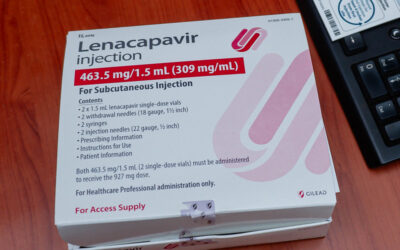
In April 2026, Mozambique officially launched long-acting injectable PrEP using lenacapavir (LEN). The launch was led by the Ministry of Health, with the first beneficiary being a pregnant woman. In this initial phase, three provinces will benefit from this approach, and pregnant and breastfeeding women will be prioritized in those locations. This demonstrates the country’s commitment to eliminating vertical transmission. A phased expansion to other provinces is being planned, depending on the availability of the medication and the progress of implementation. As someone working in the PMTCT field, I am very pleased with the country’s progress in this area.
The country is now monitoring PrEP provision among this target group to identify gaps, challenges, and opportunities for improvement in service delivery, especially for pregnant and breastfeeding women. Demand creation messages are being disseminated through various channels — including health talks at health facilities and within communities — to increase awareness and acceptance of PrEP among the target population.
Q: What value has HIVE brought to your work through your involvement with the network?
HIVE has supported us in concrete ways. We have been implementing the models we see in the network. HIVE has provided us with tools we have used to identify our gaps. After the convenings, when we return to our countries, we can discuss with our technical working groups and everyone involved in finding solutions. Sometimes, within the country, we don’t see some of the gaps we have, but when we are at HIVE, participating in the exercises and learning from other countries, we are able to recognize what is missing in our response and what we might do more of.
One concrete example is telehealth. Mozambique has an online platform for health workers to take courses, but no PMTCT courses were available there. We were thinking about it, but it was actually through HIVE that colleagues in one of our technical working groups connected with HIVE pushed us to engage with the telehealth platform. We are now working to make sure the PMTCT package is available online in the country, so anyone can access the course.
For me, HIVE is a network that brings countries together, makes countries stronger, closer, smarter, and running in the same direction. It is a network that gives us a push.
This interview with Dr. Marra is part of HIVE’s Prevention in Practice series, highlighting how countries are approaching prevention within their own health systems. Through the HIVE Impact Network, these conversations share priorities, strategies, and adaptations shaping prevention efforts and promoting peer exchange.