Zambia’s early rollout of lenacapavir (LEN) for HIV pre-exposure prophylaxis (PrEP) is showing encouraging results and reflects the country’s strategic focus on preventing new pediatric HIV infections. While Zambia has surpassed the UNAIDS 95-95-95 HIV treatment targets, pediatric HIV infections continue, underscoring the need to further strengthen HIV prevention for pregnant and breastfeeding women (PBFW) as the next critical step to ending the pediatric HIV epidemic.
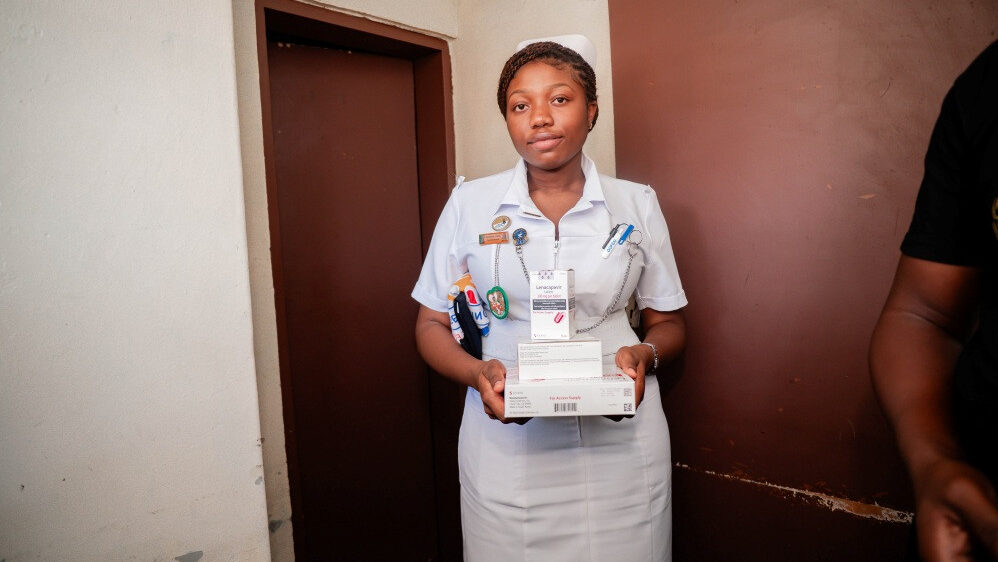
Zambia, an early adopter of long-acting cabotegravir (CAB-LA) to expand PrEP choice and strengthen HIV prevention, was one of the first countries in Africa to initiate LEN for PrEP in December 2025. Since its introduction at two healthcare facilities, 291 individuals, including 53 pregnant women and 40 breastfeeding women, have received their first LEN injection. Both facilities offer PrEP choice, including oral PrEP and long-acting cabotegravir (CAB-LA) in combination with LEN, allowing recipients of care to select prevention options that best meet their needs.
From February 9 -13, 2026, Zambia’s Ministry of Health hosted the HIVE team for a learning engagement to understand the country’s early introduction of LEN for PrEP among pregnant and breastfeeding women.
“We sought to understand how Zambia is integrating LEN into existing PrEP and maternal and child health (MCH) services, assess early uptake, and identify learning priorities and capacity-strengthening opportunities,” said Maureen Syowai, MBChB, MSc, HIVE program director. “Lessons from Zambia will guide how the HIVE network supports countries to expand prevention options, including access to PrEP, reinforcing prevention strategies for pregnant and breastfeeding women and their children.”
During site visits to University Teaching Hospital (UTH) and Chawama Level 1 Hospital, the HIVE team observed how LEN has been incorporated into existing PrEP workflows within high-volume maternal and child health (MCH) clinics. Providers described how LEN counseling and follow-up have been integrated alongside routine services, enabling access for women.
“Seeing various PrEP options, including LEN, being offered alongside other reproductive health services in busy MCH settings, reinforces that PrEP can be integrated into routine care for pregnant and breastfeeding women,” said Bernadeta Msongole, MD, MPH, HIVE regional clinical advisor for ICAP.
Providers also shared that some recipients of care are traveling from other facilities specifically to access LEN after learning it is available, signaling successful demand-creation activities and growing interest in the new prevention option.
“The early rollout of lenacapavir for HIV prevention reflects Zambia’s commitment to eliminate vertical HIV transmission by expanding prevention options, particularly for pregnant and breastfeeding women,” said Chimika Phiri, MMed, MBChB, HIV prevention lead at the Zambia Ministry of Health. “Early uptake at the two initial sites is encouraging and will help inform how we continue to scale up access to long-acting PrEP for pregnant and breastfeeding women across the country.”
In addition to the facility visits, the engagement provided HIVE with the opportunity to meet with the national network of people living with HIV, the Ministry of Health’s monitoring and evaluation team, and U.S. government representatives. Looking ahead, Zambia plans to scale up LEN enrolment by the end of 2026, with a target of initiating approximately 82,000 individuals across 542 facilities, including an estimated 21,000 pregnant and breastfeeding women. HIVE is also focused on supporting country-led initiatives to introduce and scale up LEN for PrEP.
Zambia’s rapid introduction of LEN and its early prioritization of the health of pregnant and breastfeeding women and their children is a significant accomplishment,” said Elaine Abrams, MD, principal investigator for the HIVE project. “By expanding prevention options for young women, Zambia is taking an important step toward protecting maternal health and accelerating progress toward ending the pediatric HIV epidemic.”